People
Principal Investigator
1 memberResearch Assistant
3 membersGraduate Student
2 membersUndergraduate Student
7 membersAlumni
8 membersOur collaborators.

University College Dublin
Collaborator

Imperial College London
Collaborator
Principal Investigator
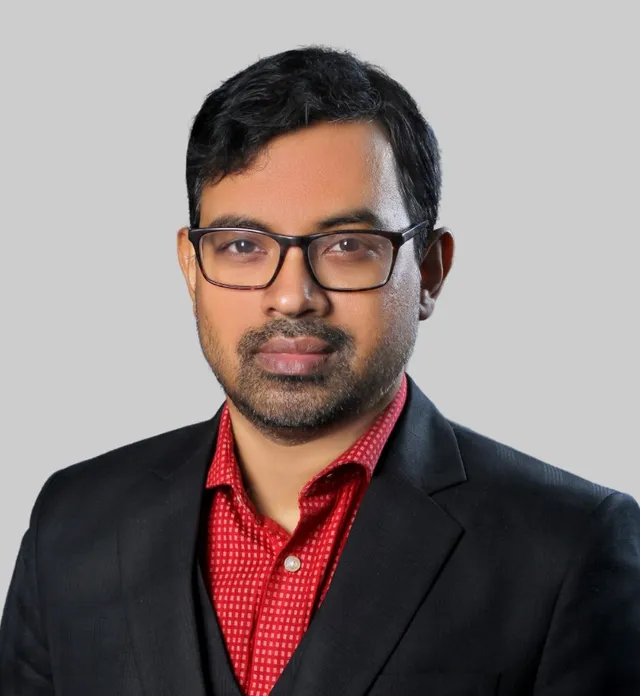
Dr. Abhishek Kumar Ghosh
Assistant Professor, RME, DU
University of Dhaka
Abhishek Kumar Ghosh is an Assistant Professor in the Department of Robotics and Mechatronics Engineering at the University of Dhaka, where he also leads the Mechatronics and AI in Medicine lab. He received his PhD in Biomechatronics from Imperial College London in 2023, supported by the prestigious Commonwealth PhD Scholarship. Before that, he earned his B. Sc. (2011) and M. Sc. (2014) in Mechanical Engineering from Bangladesh University of Engineering and Technology.
Abhishek's research focuses on detecting and analyzing human motion and muscle activities, driving the development of innovative wearable technologies for health monitoring and assistive applications. His expertise spans embedded system design, sensor fusion, biomedical signal processing, and machine learning, among other fields.
Abhishek’s research endeavor attracted multi-million-dollar research funds from the Wellcome Leap In Utero program, the Higher Education Quality Enhancement Project (HEQEP) supported by the World Bank, etc. Leveraging his experience across interdisciplinary environments, Abhishek is dedicated to bridging the gap between engineers and medical professionals, fostering collaborations that pave the way for scalable, cutting-edge healthcare solutions.
Research Assistant

Saadman Sakib
Research Assistant
University of Dhaka
I am an undergraduate student in the Robotics and Mechatronics Engineering department at the University of Dhaka. My research interests lie in the intersection of biomedical engineering and wearable technology, focusing on medical imaging, wearable monitoring devices, and MMG signal sensing using piezo and accelerometer sensors. I am particularly interested in developing efficient sensor packaging techniques with rigorous testing to ensure reliability and accuracy. Additionally, I explore 3D visualization methods for better data representation and work on selecting comfortable, skin-friendly materials for long-term wearable applications. My goal is to contribute to the advancement of remote health monitoring systems, making them more accessible and effective
Research Assistant
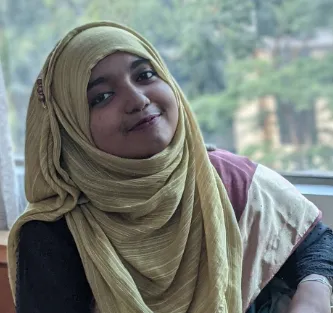
Maliha Taslima Chowdhury
Research Assistant
University of Dhaka
Maliha Taslima Chowdhury is currently pursuing an hon's degree in Robotics and Mechatronics Engineering department at the University of Dhaka. Her focal area comprises electronics, circuit design, control systems and mechatronics. CAD, mechanical design and manufacturing have also kept her keenly interested. Beyond academics, she is fascinated by various sectors of economics, business management, and supply chain dynamics. Her past time activities include drawing ambigrams and reading books.
Research Assistant
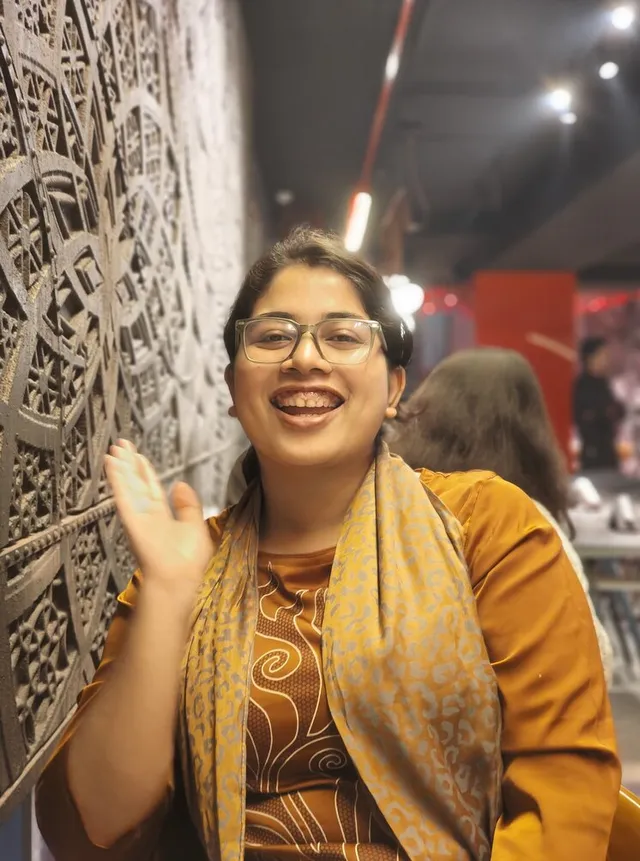
Azrin Zibat
Graduate Research Assistant
University of Dhaka
Graduate Student

Shahriyar Maraz
Research Assistant
University of Dhaka
Shahriyar Maraz Pavel received his B.Sc. in Robotics and Mechatronics Engineering from the University of Dhaka. Currently he is a masters student under same department.
Graduate Student
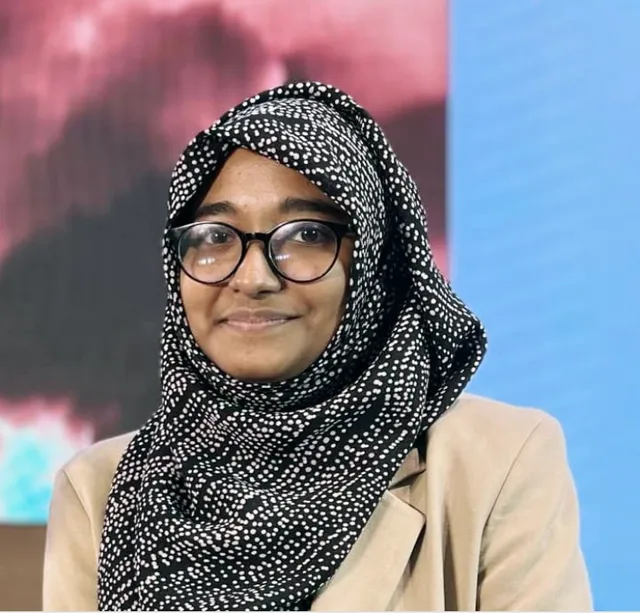
Sumiya Afrose
Graduate Student
University of Dhaka
Undergraduate Student
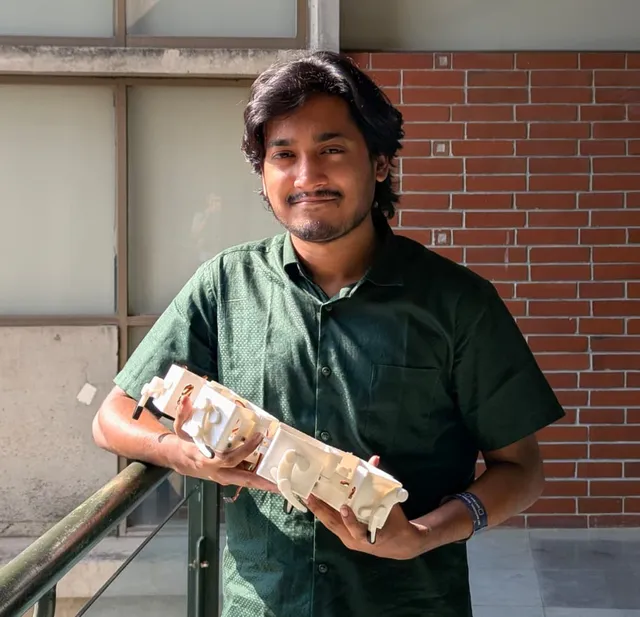
Samudra Jit Saha
Undergraduate Student Researcher
University of Dhaka
I am an undergraduate student studying at the Department of Robotics and Mechatronics Engineering, University of Dhaka. When I started my undergraduate degree, I had one clear goal: I wanted to be able to build anything I could imagine, entirely from scratch. Taking an idea from a blank slate to a fully functioning prototype requires a solid mix of mechanical, electrical, and software engineering. So, I got started with all three.
Over the last few years, I’ve worked on a wide range of personal, professional, and research projects: from modeling and fabricating mechanisms, designing custom PCBs to writing the control software. Through these hands-on experiences, I’ve reached a point where I can confidently design the mechanical systems, wire up the embedded systems, and write the code, even integrate AI, to bring a project to life.
Now, can I build literally anything? Let's be real, no. I'm far from understanding F1-level aerodynamics, and my materials knowledge isn't getting us to Mars anytime soon. But I do have a strong engineering foundation and a genuine love for problem-solving. If there's a skill I'm missing, I'll learn it. If you can imagine it, I have the capability to figure it out and build it.
Undergraduate Student
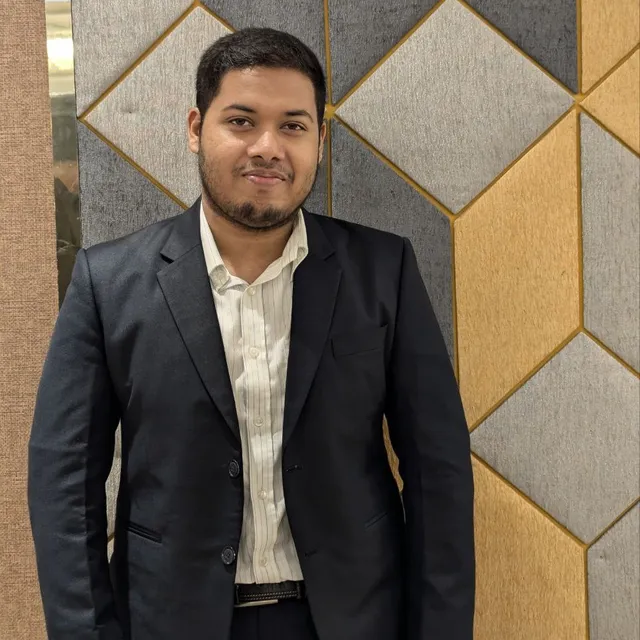
Md. Abid Chowdhury
Undergraduate Student Researcher
University of Dhaka
My journey in the Department of Robotics and Mechatronics Engineering at the University of Dhaka didn't start with a desire to just turn wrenches or solder wires. It started with a fascination for the digital proving ground—the ability to mathematically predict, train, and perfect a system before a single physical part is ever manufactured. Translating a complex biological concept into a viable mechatronic system requires rigorous validation and smart control, which is why I gravitate entirely toward simulation, data analysis, and artificial intelligence.
Over the past few years, my work has centered on bio-inspired robotics. Whether I am analyzing the kinematics of a bat-inspired UAV perching mechanism or evaluating the dynamics of a minimal-actuator sea turtle robot, I thoroughly understand the analytical pipeline. My expertise lies in running complex, multi-physics environments in Ansys or COMSOL, crunching the data in MATLAB, and tying the control architecture together using ROS 2 and Python. To push these systems further, I’ve integrated Edge AI and machine learning into my workflow. By deploying lightweight neural networks for real-time inference or using AI to optimize control algorithms within simulations, I focus on giving these bio-inspired mechanisms the autonomous intelligence they need to survive outside the lab.
Now, am I the person you call to CNC-machine a custom chassis or hand-solder a complex motherboard? Definitely not. My primary workspace is a simulation space, not a manufacturing floor, and my hands-on fabrication skills aren't building a rocket engine anytime soon. But I do possess a highly adaptable engineering foundation and a deep obsession with solving problems in the virtual space. I am the one ensuring the physics are airtight, the data is sound, and the AI models are optimized long before the physical build even begins. If a project requires a new simulation environment or a cutting-edge machine learning framework, I will master it. You bring the concept, and I have the digital capability to validate it, make it intelligent, and prove exactly how it can come to life.
Undergraduate Student
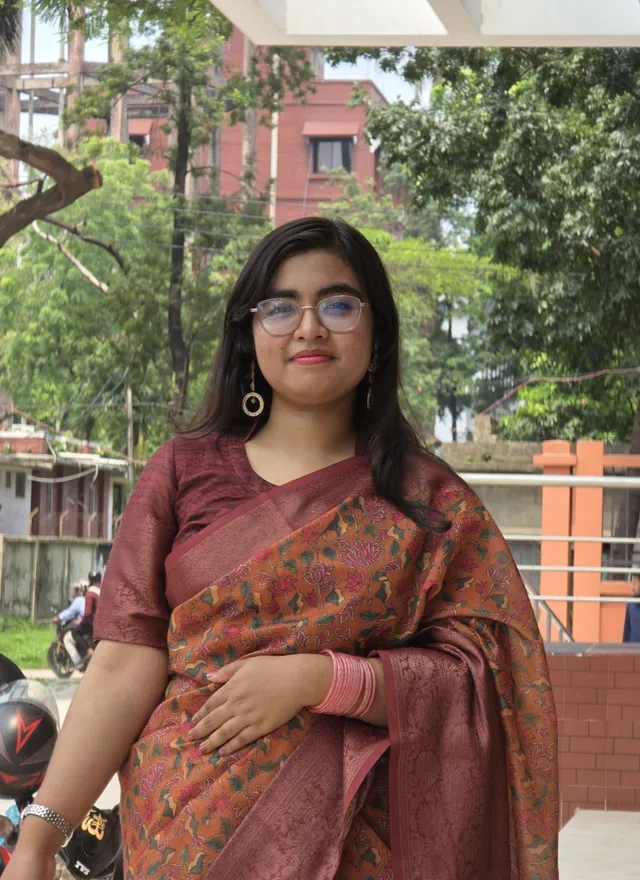
Sayma Islam
Undergraduate Student Researcher
University of Dhaka
I build robots at the intersection of complex geometry and intelligent control. As a final-year undergraduate student in Robotics and Mechatronics Engineering at the University of Dhaka, my expertise lies in translating intricate mechanical concepts—like modular locomotion and origami configurations—into functional, adaptive robotic hardware.
My research approach bridges the gap between high-fidelity physics simulation and real-world execution. During my collaboration with the MAIM Lab, I contributed to the mechanical development and locomotion analysis for the Decipede (Flexipede) modular robot, successfully delivering its hardware iterations for rough-terrain traversal. Currently, I am applying this workflow to my undergraduate thesis, where I am designing a Kresling origami-inspired inchworm robot for in-pipe maintenance and implementing reinforcement learning (RL) to optimize its locomotion control.
My technical toolkit spans CAD modeling, multi-physics simulation, PCB design, and additive manufacturing. Whether it is refining a finite element analysis model, routing a board, or training a control policy, I thrive on the precision engineering required to take a robot from a blank canvas to a fully functional, intelligent prototype. I am always looking for the next complex design challenge to solve.
Undergraduate Student
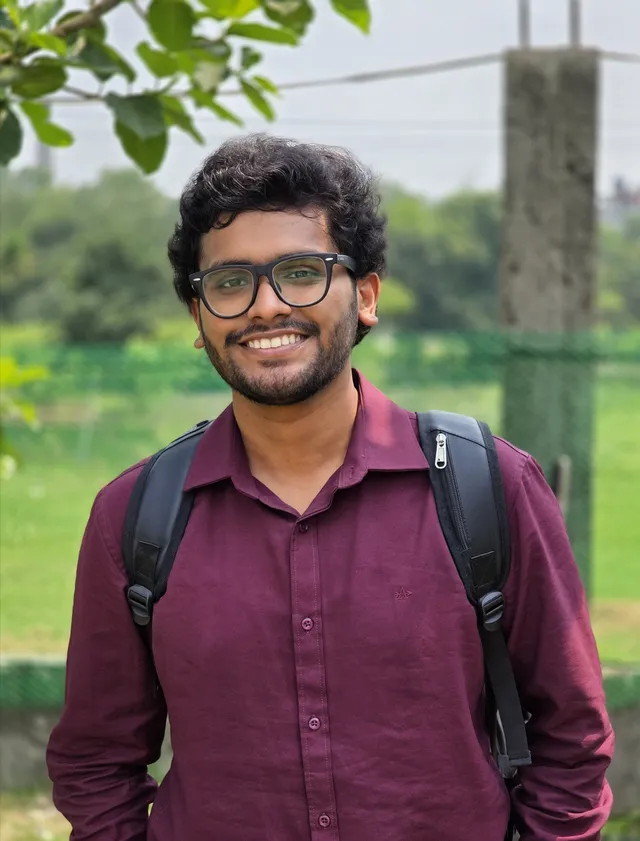
Asraful Islam Hemel
Undergraduate Student Researcher
University of Dhaka
I did not enter robotics and mechatronics engineering because I was interested in building isolated prototypes or running simulations that never leave a computer. What drew me to robotics was the challenge of making machines understand and respond to the physical world.
That interest led me toward edge computing, multimodal IoT, and embedded intelligence ; systems capable of sensing complex biological and environmental phenomena, processing information locally, and making decisions where the data is generated. For me, robotics becomes truly interesting at that boundary between computation and reality.
Over the past few years, I have explored this boundary through work spanning healthcare, structural health monitoring, and autonomous navigation systems. My thesis, a unified digital health twin, reflects this approach by combining technologies such as gait-analysis insoles and smart hydration bottles to create a richer digital representation of human health. In parallel, I have worked on edge-native multi-sensor systems designed to turn raw physical measurements into meaningful information at the source.
Building these systems has required me to work across the entire engineering stack. I design custom PCBs around STM32, ESP32, and PIC microcontrollers, develop embedded firmware, and build robotic control architectures using C++ and ROS 2. I enjoy working at the point where electrical, mechanical, and software decisions stop being independent and begin affecting one another.
More recently, I have been pushing these systems toward Edge AI. I have integrated PyTorch-based models for real-time inference and explored machine learning for applications such as demographic analysis. My interest, however, is not simply in putting an AI model onto a microcomputer. I am interested in the engineering problem underneath it: how do we make intelligence operate reliably under real constraints of computation, latency, power, sensing, and hardware?
That is ultimately where I see myself.
I am not primarily a simulation engineer, nor do I want to work exclusively within a single layer of a robotic system. I work best in the space between the digital model and the physical machine: designing the electronics, building the embedded architecture, integrating the algorithms, validating the data, and making sure the final system actually works outside the lab.
My experience in the robotics startup ecosystem has also shaped the way I approach engineering. I am comfortable entering unfamiliar technical territory, learning what a project demands, and building across disciplines when necessary. Whether that means developing a new embedded platform, integrating an advanced ROS 2 architecture, or optimizing an AI model for deployment at the edge, I am willing to go deep enough to make the system work.
At its core, my approach to robotics is simple: I want to build machines that can sense, think, and act in the real world.
Give me a concept, and I want to take it all the way: from the first architecture and PCB to embedded software, intelligent perception, control, validation, and a physical prototype that proves the idea is more than a simulation.
Undergraduate Student
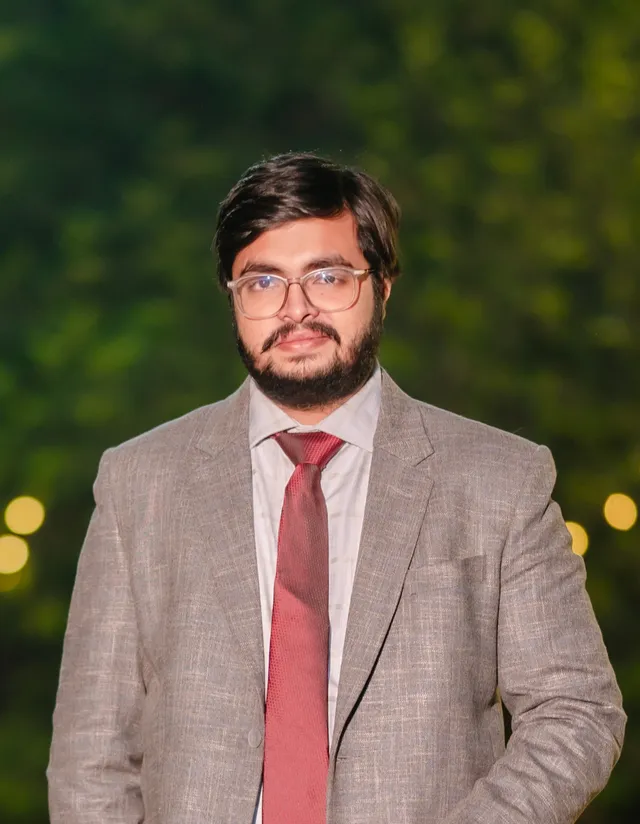
Khondakar Mehrab Anwar
Undergraduate Student Researcher
Undergraduate Student

Mugdha Morshed
Undergraduate Student
Marufa Akter
Alumni

Mohammad Moniruzzaman Akash
Research Assistant
University of Dhaka
AKASH serves as a Research Assistant at the Mechatronics and AI in Medicine (MAIM) Lab, where he is integral to the "Translation of a Wearable Fetal Movement Monitor towards Stillbirth Prevention" project. This initiative, funded by Wellcome Leap (In Utero) and in collaboration with University College Dublin, aims to develop a wearable device for monitoring fetal movements to aid in stillbirth prevention. His expertise encompasses Autonomous Robotics Systems, Artificial Intelligence, Wearable Sensors, and Mobile Robots, all aimed at healthcare innovation. Akash's current focus includes analyzing fetal movement data, investigating maternal movement using IMU data, and enhancing the accuracy of fetal movement sensors. He graduated with a B.Sc. in Robotics and Mechatronics Engineering from the University of Dhaka, demonstrating his dedication to the advancement of healthcare through technology.
Alumni
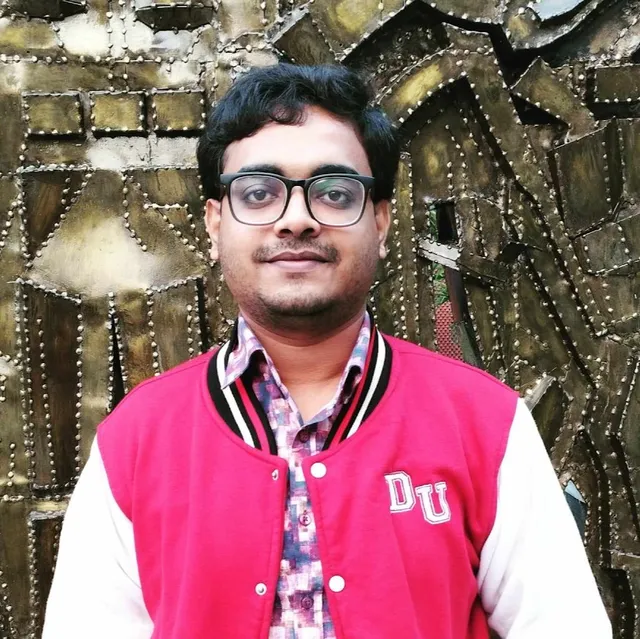
Ahsan Imran
Research Assistant
University of Dhaka
AHSAN IMRAN is a Research Assistant at MAIM Lab, University of Dhaka, Bangladesh. He is working on a Wellcome Leap (In Utero) funded project (Title: Translation of a Wearable Fetal Movement Monitor towards Stillbirth Prevention) collaborating with University College Dublin to develop a wearable device to monitor fetal movements to prevent stillbirth. Recently, he received his MSc degree in Robotics and Mechatronics Engineering from the University of Dhaka. His research spans a variety of areas, including the development of wearables for eye gesture recognition, fetal movement monitoring, UAV-based human action recognition, and video surveillance systems.
Alumni

Syeda Faiza Ahmed
Research Assistant
University of Dhaka
FAIZA is a Master's student in the Department of Robotics and Mechatronics Engineering at the University of Dhaka. Her research interests are wide-ranging and include Federated Learning, Artificial Intelligence, Embedded Systems, IoT-based Hardware-firmware integration, and other System-on-Chip (SoC) assembly-level work. Currently, she is a Research Assistant at the Medical Automation and Intelligent Machines (MAIM) Lab, mentored by Dr. Abhishek Kumar Ghosh. In this role, she not only specializes in the analysis of hardware, circuits, and sensor data but also actively participates in the process of securing ethical approvals for research applications
Alumni
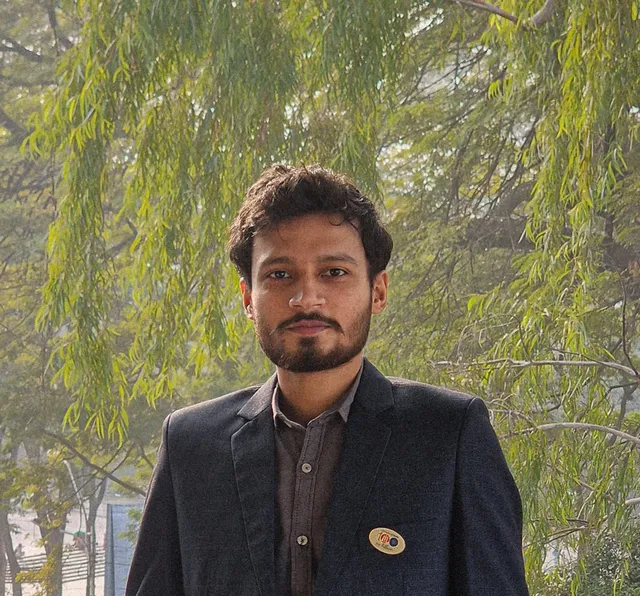
Monaf Chowdhury
Alumni
University of Dhaka
Monaf recently joined as a Research Assistant at MAIM Lab, University of Dhaka. He is working on a Wellcome Leap (In Utero) funded project (Title: Translation of a Wearable Fetal Movement Monitor towards Stillbirth Prevention) collaborating with University College Dublin to develop a wearable device to monitor fetal movements to prevent stillbirth. Recently, he received his BSc degree in Robotics and Mechatronics Engineering from the University of Dhaka.
Alumni
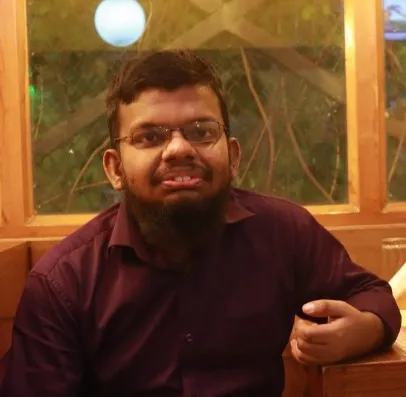
Omar Ibne Shahid
Lecturer, NSU, Dhaka
North South University, Dhaka, Bangladesh
Alumni
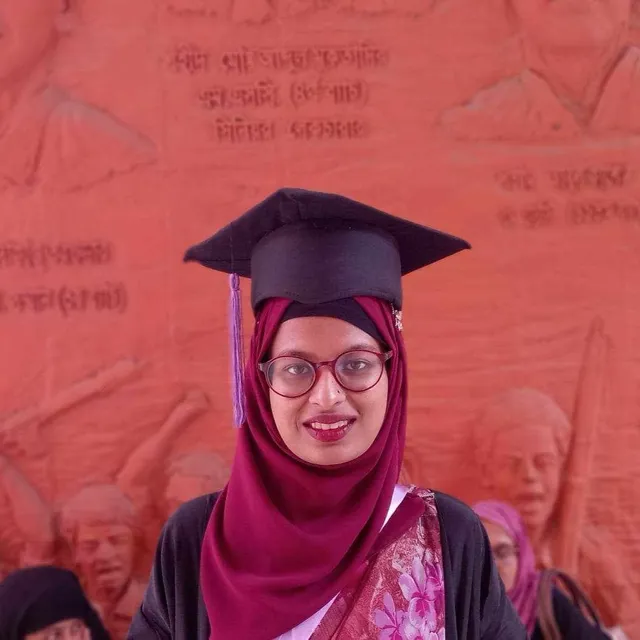
Sabi Jahan Maliha
Graduate Student
University of Dhaka
Sabi Jahan Maliha is a fresh graduate, completed her Bachelor & Master of Science from the Department of Robotics & Mechatronics Engineering, University of Dhaka (DU), Bangladesh. Her research interest involves soft manipulators, wearable technology, embedded systems and 3d printing. She is a recipient of the prestigious MEXT Scholarship awarded by the Government of Japan. She was working as a Research Assistant of Dr. Abhishek Kumar Ghosh on the experiment section of the wearable monitor of fetal movement organized by WelcomeLeap.
Alumni
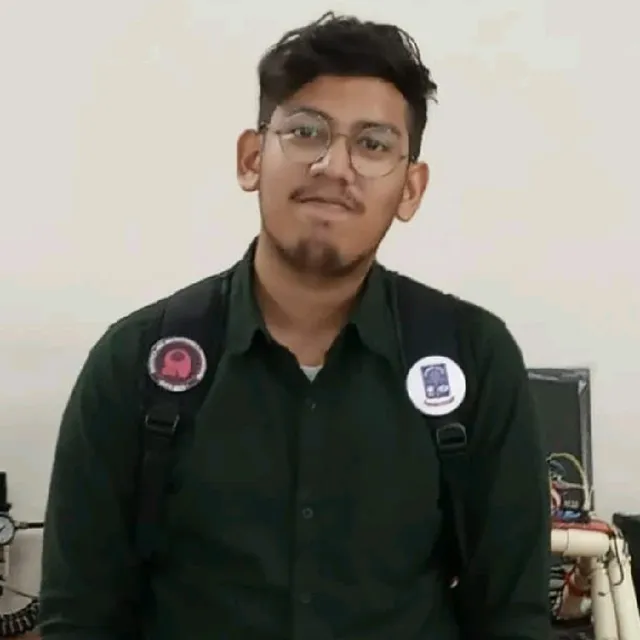
Mikdam-Al-Maad Ronoue
Lecturer
Independent University of Bangladesh
Alumni
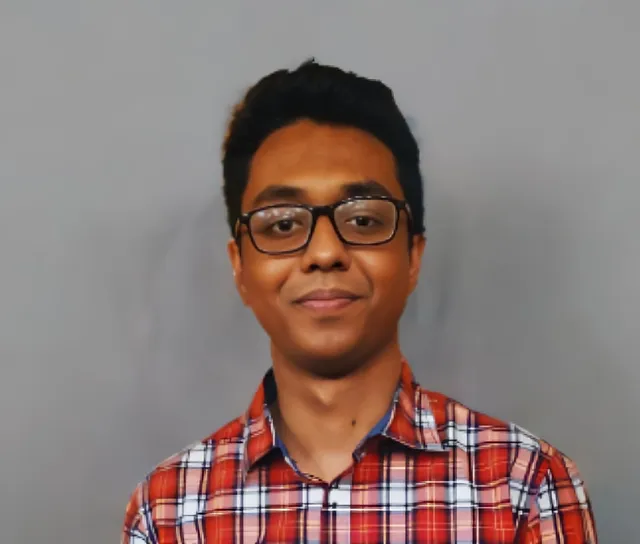
M A Batin
Alumni
University of Dhaka
Batin recently joined as a Research Assistant at MAIM Lab, University of Dhaka. He is working on a Wellcome Leap (In Utero) funded project (Title: Translation of a Wearable Fetal Movement Monitor towards Stillbirth Prevention) collaborating with University College Dublin to develop a wearable device to monitor fetal movements to prevent stillbirth. He graduated from University of Dhaka with a B.Sc. degree in Robotics & Mechatronics Engineering. His research interests encompass a diverse range of topics, including the application of AI in agriculture and human action recognition within surveillance systems, complemented by extensive experience in the field of computer vision.